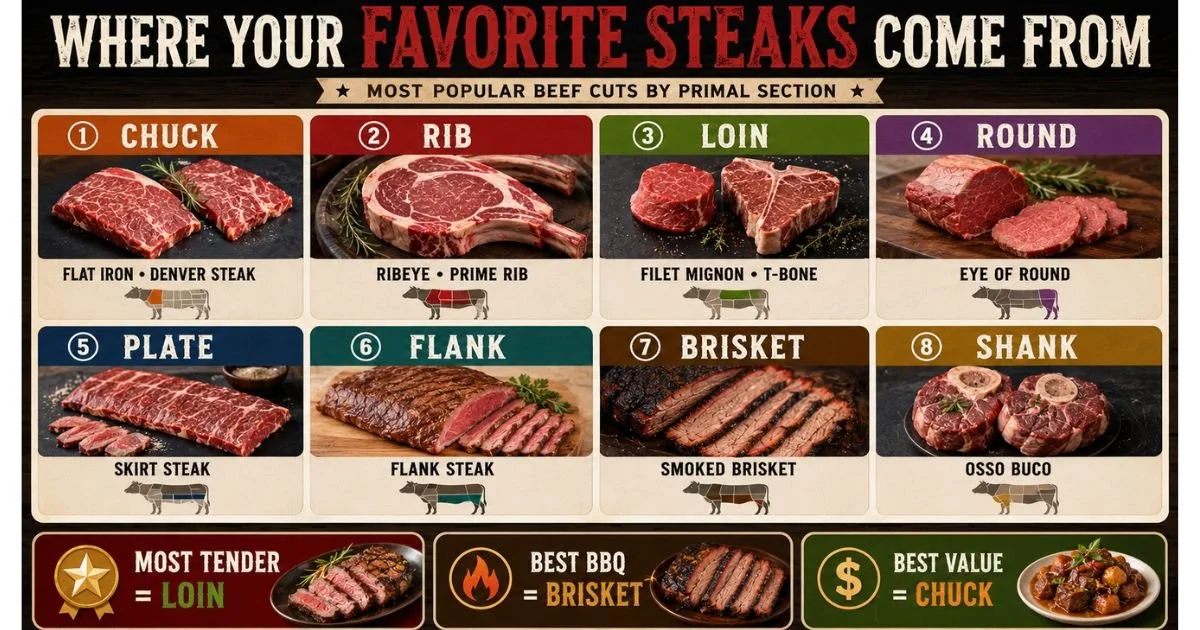
Beef Cuts and Best Uses
Beef cuts differ in tenderness because different muscles do different work. Tender cuts usually respond well to fast, dry heat. Muscles with more connective tissue often become rich and tender when cooked slowly with time and moisutre.
Got Questions?
What are the main primal cuts of beef?
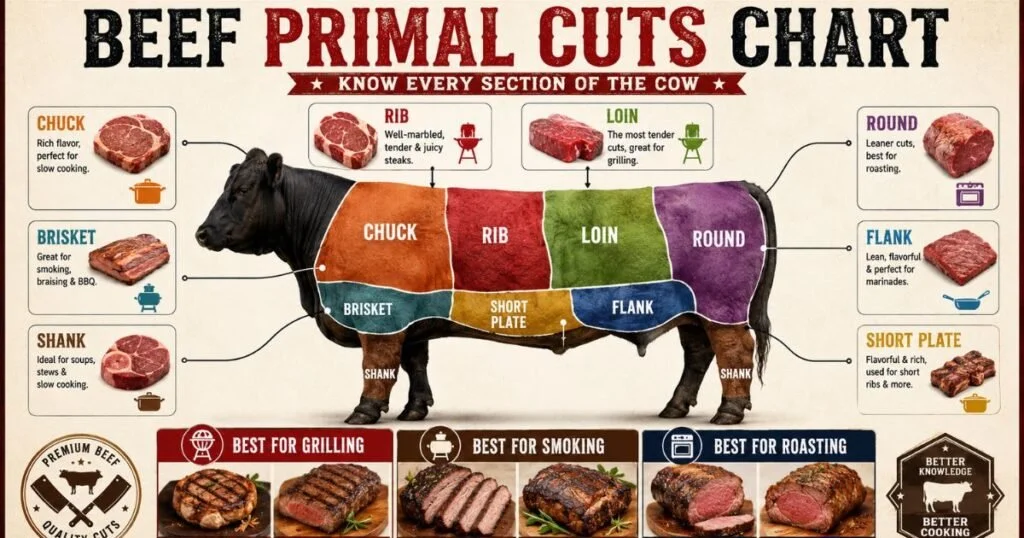
The eight commonly named U.S. primal cuts are chuck, rib, round, brisket, plate, and flank. Some charts divide the loin into short loin and sirloin.
What is usually the most expensive beef cut?
Tenderloin and filet mignon often command the highest price per pound because the muscle is exceptionally tender and represents a small share of the carcass.
Which beef cuts are the leaner choices?
Tenderloin, top sirloin, top round, and eye of round are often lean when visible fat is trimmed. Grade, trimming, and preparation still matter.
Which beef cuts usually contain more fat?
Ribeye, short ribs, brisket point, and well marbled chuck cuts are often richer. Fat level varies with grade, finish, and trimmming.
Which cuts are better for slow cooking?
Chuck, brisket, shank, short ribs, and many round cuts benefit from low heat, time, and moisture because they contain more connective tissue.
Why can’t I receive every steak and roast from one side?
Many options use the same section of the carcass. For example, the short lion can become the T-bone and porterhouses or be separated into strip steak and tenderloin, but not full quantities of both.